Before you give it: is metronidazole the right fit?
Metronidazole only helps a specific set of problems. A quick check first:
- Get a diagnosis first. Not every upset stomach or loose stool needs metronidazole; many cases resolve on their own or call for a different treatment. A vet should confirm what’s going on.
- Giardia and anaerobic infections are its wheelhouse. Metronidazole is a common choice for giardia in dogs and for anaerobic bacterial infections; it is not a broad-spectrum “any infection” drug.
- Weigh your pet. The dose is set by body weight, so your vet needs an accurate weight to prescribe correctly.
- Never use leftover human tablets. Human metronidazole is the same molecule but different strengths and formulations; dosing a pet from a human pack is how accidental overdoses happen. Let the vet set it.
What metronidazole for dogs and cats is
Metronidazole, also sold under the brand name Flagyl, is a nitroimidazole antibiotic used in dogs and cats mainly against protozoa and anaerobic bacteria — organisms that live where there is little oxygen, such as the gut.1 That is a narrower target than a broad-spectrum antibiotic, and it does nothing for viruses, most other parasites, or the aerobic gram-negative bacteria other antibiotics target — which is exactly why a veterinarian matches it to the right problem rather than reaching for it by default.
It is used most often for giardia, a protozoal parasite behind a lot of stubborn, soft or greasy stool; for some cases of diarrhea and colitis driven by anaerobes; and for certain dental, abscess, and abdominal infections, usually as part of a broader plan.2 A vet decides whether a given case actually needs it — many do not.
We are a licensed veterinary pharmacy. Our job is to sell you the right treatment, and to tell you plainly when metronidazole is the wrong choice for your pet. That candor is the whole point.
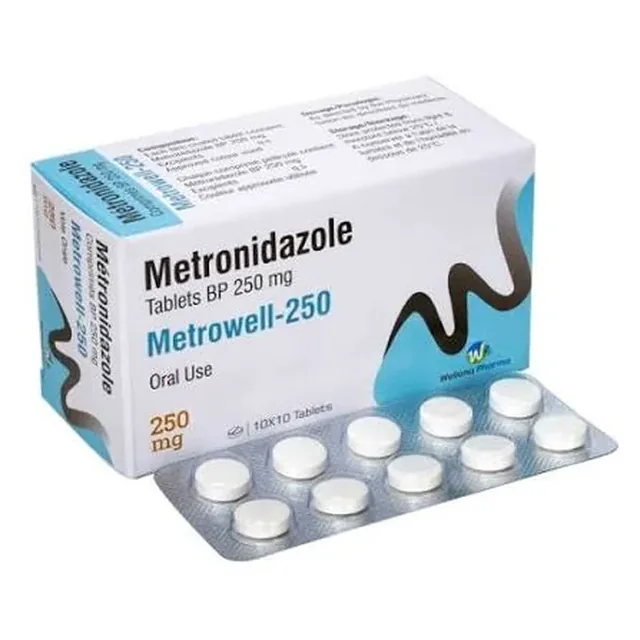
| Active ingredient | Metronidazole |
|---|---|
| Strength | 250 mg or 500 mg per tablet |
| Also sold as | Flagyl |
| Drug class | Nitroimidazole (antiprotozoal / antibacterial) |
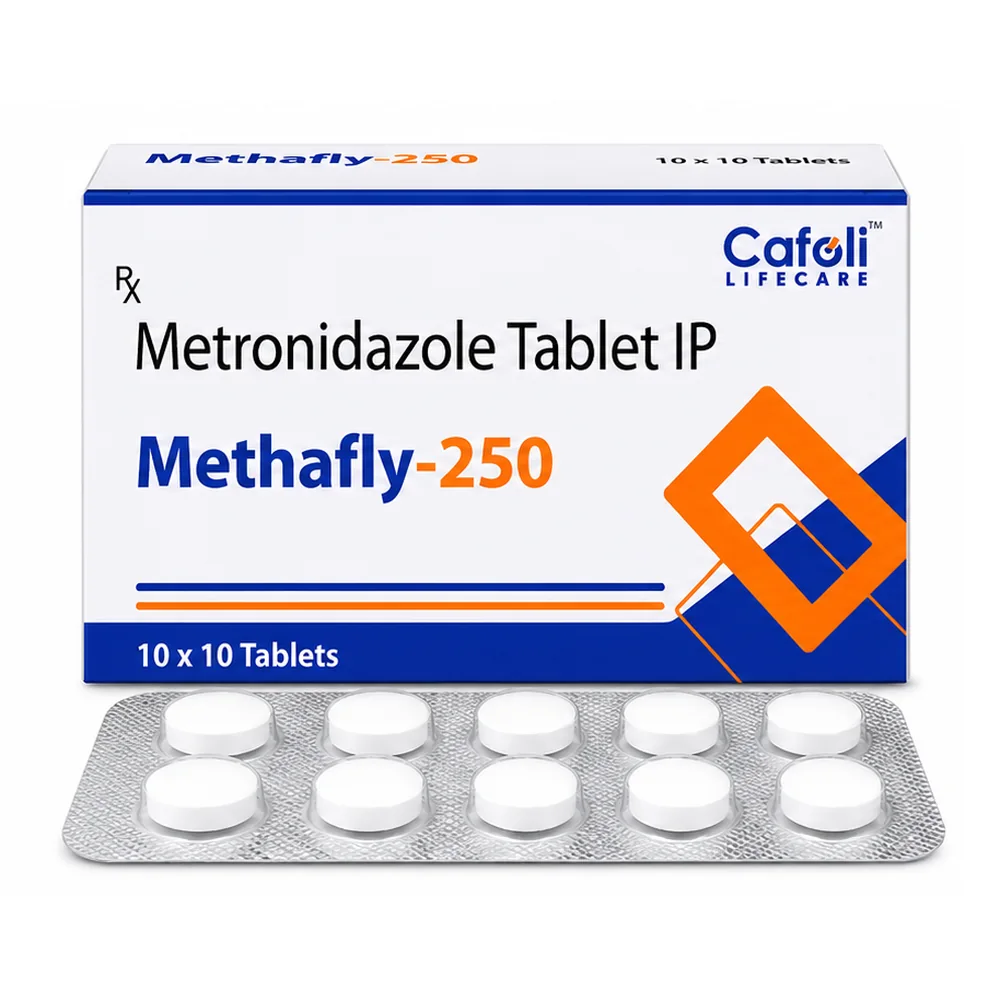
| Form | Film-coated tablets in blister packs |
| Intended use | Dogs and cats only |
| Availability | Prescription, not for human use |
| Delivery to | All 50 US states, contact us for other countries |
Metronidazole dosing for dogs and cats: your vet sets it
Metronidazole for dogs and cats is dosed by body weight and set by your prescribing veterinarian, who chooses the dose and the length of the course based on what is being treated, your pet’s weight, and their history. We do not set doses, and this page does not list one. The label on your order reflects your prescribing vet’s instructions — follow it exactly and never adjust the dose yourself. Metronidazole comes in 250 mg and 500 mg tablets; which strength fits your pet is part of what the vet decides.
Side effects to watch for
Common, usually mild effects include nausea, drooling, and a drop in appetite. The important one to recognize: at higher doses or with longer courses, metronidazole can cause neurological signs — wobbliness, a head tilt, unsteady walking, or flicking eyes. If you see any of these, stop the medication and call your vet right away. It is generally avoided in pregnancy. For the full picture, see our detailed guide: Metronidazole for dogs: side effects.
⚠ Important safety notes
- Prescription medication. A veterinarian decides whether it’s appropriate and sets the dose — we never set one.
- Watch for neurological signs. Wobbliness, head tilt, unsteady gait, or eye flicking at higher doses or longer courses — stop and call your vet.
- Not the right drug for everything. It does nothing for viruses or aerobic gram-negative infections; using it for the wrong problem just delays the right treatment.
- For dogs and cats only. Keep away from people, avoid in pregnancy, and never dose a pet from a human prescription.
Cost & how to get it
There is no public cart or online payment step. You place a reservation, a veterinarian reviews it and writes the prescription if it’s appropriate, then our pharmacy sends a secure payment link before anything ships — so the veterinary review costs you nothing separate, and you pay only for the medication. If metronidazole isn’t right for your dog or cat, the order isn’t filled and you aren’t charged.
| Pack size | 250 mg | 500 mg |
|---|---|---|
| 30 tablets | $39.99 · $1.33/tablet | $45.99 · $1.53/tablet |
| 90 tablets MOST POPULAR | $89.99 · $1.00/tablet | $102.99 · $1.14/tablet |
| 200 tablets | $129.99 · $0.65/tablet | $148.99 · $0.74/tablet |
| 500 tablets BEST VALUE | $199.99 · $0.40/tablet | $229.99 · $0.46/tablet |
The 500 mg tablet costs a little more than the 250 mg at each pack size — your vet sets the strength your pet needs.
Related guides
Frequently asked questions
Do I need a prescription?
Yes — but you don’t have to arrange it yourself. A veterinarian reviews your order and prescribes it, then we dispense it legally. If it’s not right for your dog or cat, the order isn’t filled and you aren’t charged.
Is this the same as Flagyl?
Flagyl is a brand name for metronidazole. This is the same active ingredient; brand and packaging may vary.
Can I buy metronidazole for dogs over the counter?
No legitimate pharmacy sells it over the counter — it’s a prescription medication. What we do is make the prescription step simple: a vet reviews your order and writes it as part of the purchase, instead of you arranging a separate visit first.
What’s the difference between the 250 mg and 500 mg tablets?
Only the amount of metronidazole per tablet. Which strength suits your pet is part of what the prescribing vet decides from their weight and what’s being treated.
Can I give my dog metronidazole for diarrhea?
Sometimes it’s the right choice and sometimes it isn’t — many cases of diarrhea don’t need an antibiotic at all. That’s the call the reviewing vet makes, which is why the prescription step matters.
Medical disclaimer
This site is for informational purposes only and is not veterinary advice, diagnosis, or a treatment recommendation. A licensed veterinarian should determine medication selection, prescribing, dosing, and treatment for the individual animal. Never give a dog or cat antibiotics intended for another species; the wrong drug or dose can seriously harm your pet. All medications sold on this site are for animal use only and are not intended for human use or consumption.
Sources & References
- Merck Veterinary Manual, “Nitroimidazoles Use in Animals.” merckvetmanual.com (accessed 2026) Supports: metronidazole is a nitroimidazole with antiprotozoal and anaerobic antibacterial activity, effective against giardiasis.
- Jones S, Briantais P, Von Simson C, et al. “Treatment of giardiasis in dogs: field clinical study of a metronidazole-based flavored oral suspension.” Parasites & Vectors 2025;18(1). doi:10.1186/s13071-025-06797-w. pmc.ncbi.nlm.nih.gov (2025) Supports: in a controlled field study, metronidazole produced a 99.92% reduction in Giardia cyst counts in naturally infected dogs.
- FDA Center for Veterinary Medicine. Animal & Veterinary. fda.gov (accessed 2026) Supports: the prescription status of veterinary antibiotics.