These images are for illustrative purposes only.
Pet First-Aid Kit for Dogs & Cats
Complete kit · SKU PREP-KIT-FIRSTAID · Free shipping
QUANTITY
No payment now. We confirm your address and send a secure payment link — no veterinary review needed for this item.
Why every pet owner needs one
Emergencies happen away from the clinic — a cut paw on a hike, a bleeding nail, a bee sting. A prepared kit lets you act calmly in the first minutes, which is often when it matters most. Built for dogs and cats, entirely non-prescription.
How to use it
Keep one at home and one in the car. Store your emergency vet and poison-control numbers with the kit. First-aid is a bridge to professional care — stabilize, then get to a veterinarian.
What belongs in a pet first-aid kit
A workable kit covers wounds, restraint, and the phone numbers you'll want in a hurry. A practical starting list:
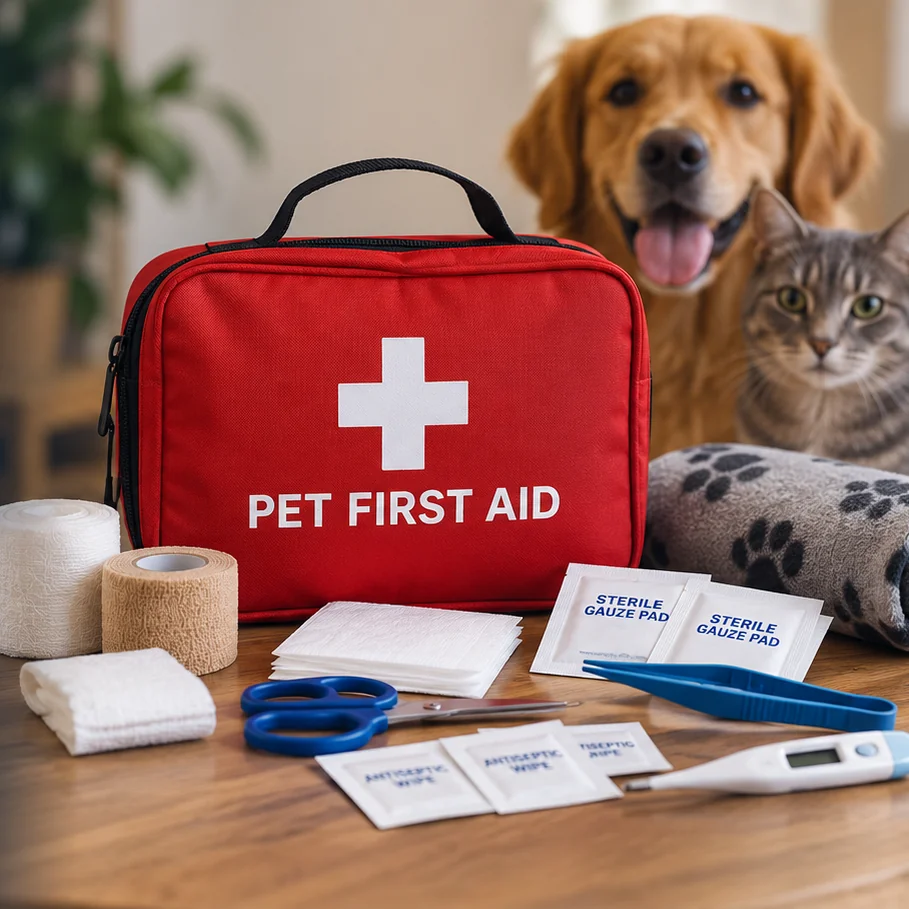
- Gauze pads and a self-adhesive bandage wrap that doesn't stick to fur
- Blunt-tipped scissors and tweezers
- A digital thermometer and a water-based lubricant
- Saline wound-flush and non-stick wound pads
- Disposable gloves and a clean towel
- A soft muzzle or a strip of cloth — even a gentle pet may bite when hurt
- Your vet's number, the nearest emergency clinic, and an animal poison-control line
Keep the same core list for dogs and cats, and adjust sizes to your pet.
When a kit isn't enough — call your vet
First-aid buys time; it does not replace a veterinarian. Call a vet or an emergency clinic right away for trouble breathing, a wound that won't stop bleeding, a suspected poisoning, bloat, seizures, heatstroke, or any pet that is collapsed or in severe pain. When in doubt, make the call, describe what you see, and follow their instructions on the way in.
Dogs and cats: small differences
The core kit is the same for dogs and cats, but a few details differ. Cats are smaller, so bandage material and any wraps should be sized down and applied loosely. Cats also hide pain and stress more than dogs, so a quiet carrier or a towel to wrap them in is especially useful for safe handling. Never give a cat any medication, ointment, or human product from the kit without your veterinarian's say-so, since cats react badly to several things dogs tolerate.
Where to keep your kits
Keep one kit at home where you can reach it quickly and a second in the car for walks, travel, and trips to the vet. Store kits somewhere cool and dry, out of direct sun and away from children. Tape a card to the inside lid with your veterinarian's number, the nearest emergency clinic, and an animal poison-control line, so the information is there even if your phone is not.
Check and restock it
A first-aid kit only helps if its contents are usable. Every few months, open the kit, check that nothing is expired, used up, or damaged, and replace what is missing. After you use the kit in an emergency, restock it the same day rather than waiting. If your pet has a specific condition, ask your veterinarian whether there is anything particular they would want you to keep on hand.
Common first-aid mistakes to avoid
A few well-meaning steps can make things worse. Do not give human pain relievers, which can be toxic to pets, and do not apply human creams or ointments unless your veterinarian tells you to. Do not use hydrogen peroxide on wounds, and only ever induce vomiting on direct instruction from a veterinarian or a poison-control line. Above all, do not let first-aid delay professional care for a serious problem; stabilize, then get your pet to a veterinarian.
Build it or buy a ready-made kit
You can assemble a kit from items you already have plus a few additions, or start with a ready-made pet first-aid kit and top it up for your pet. A pre-made kit is convenient and well organized; a homemade one lets you tailor the contents and sizes. Either way the goal is the same: the right supplies, in one place, that you know how to use, with your emergency numbers attached. What matters is that it is stocked, current, and reachable when you need it.